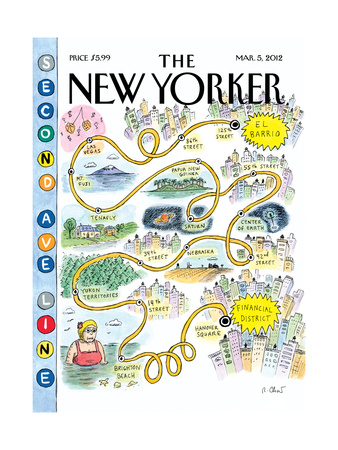
(Some distracted reviews). (Sleep deprived reviews also).
Movie: The Avengers
It's hard to review something after reading a review of that something. I read a review that said something about how the acting, the actors, lift a pretty typical superhero movie into a really really good superhero movie, and now that's what I want to say. Maybe I only thought that because of the review. Maybe partly I didn't see the movie, but saw some amalgam of the movie and the review I'd already read. But I did really think myself that the acting made it. Never realised before that Robert Downey Jnr is someone fun to watch. So good. You should see this.
Play: Midsummer (a play with songs)
Funniest sex scene. And then to discover that Japanese rope bondage is apparently not a sex thing? Who knew. (You know, actually, what I thought was innocent wikipediaing suggests that maybe the play mislead me on that front). First half better than the second. Some nice songs. Like a not quite as good Boy Girl Wall. With Scottish accents. But that notwithstanding, not quite as good. You can see this if you like.
Poem: Matt Kahn's Email
Who is Matt Kahn? Should I know that? I know I like this. Emily XYZ makes me feel like it's 1989 in New York, whatever that feels like. JOHN STEWART MILL. JOHN STEWART MILL. JOHN STEWART MILL. (It slopes to the horizon). You should go listen to this.
Pub: The Bridge Club
Not strictly a pub, but it's alliteration! And rhyming! A new club thing upstairs at the Irish club. Saw Oscar + Martin there, who are excellent and were good, despite not being able to hear themselves. Despite also constant screeching feedback. But the point is, there are chandelier things. And wood panels. And one beautiful ceiling. With shamrocks and harps. And underneath, it's all skinny jeans and irony.You should check it out.
Beer: The Quiet American
A splendiferous Little Creatures single batch taking an American hop spin on a Trappist ale. Packs a beautiful punch. How do you review beer? Fruity. Bitter. Alcoholy. Good. You should get some while you can.
Book: Falling Man
This was nice and short last week. Dellilo's got a magic way with a sentence. I read somewhere he worries himself over the heights of the letters in his sentences, the shorts and talls, banging away at a manual typewriter. This one, though, falls a bit flat. All ends up a bit... meh. You should go with White Noise instead.
Song: Vomit
Been playing this all day. So should you.
...And now, so I'll never have to write a review as bad as these again, I'm off to a lecture on reviews.
Stealing Stuff (like this post)
Sorry about the lack of posts lately. Hopefully this gem from Slate might make up for it.
|
|
CAN I MAKE STUFF UP? |
|
|
|
|
|
Journalist
If you make stuff up as a journalist, you will be considered such a liar that the state of California won’t let you become a lawyer. |
|
|
Memoirist
If you make stuff up as a memoirist, Oprah will excoriate you on the air, and your publisher will refund duped readers the cost of your book, but you may have a lucrative second career employing young writers to pump out popular fiction. |
|
|
Columnist
If you make stuff up as a columnist, you will get suspended. Then you can write your column again. |
|
|
Monologist
If you make stuff up as a monologist, Ira Glass will be very disappointed in you, but lots of people will defend the “greater truth” of your story. |
|
|
Nonfiction Novelist
If you make stuff up as a “nonfiction novelist,” people will call you out on it eventually, but you’ll still go down as a great writer (especially if you die prematurely). |
|
|
Humorous Journalist
If you make stuff up as a humorous journalist, the editor-in-chief of The New Yorker will be heartbroken. |
|
|
Biopic Director If you make a movie “based on a true story” that includes made-up stuff, journalists will write articles pointing out where you were wrong, but you might win an Oscar anyway. |
|
|
Historical Novelist If you make stuff up as a historical novelist, people will point out on Wikipedia that you were wrong and evaluate your claims on TV, but you can still make the bestseller list. |
|
|
Period-Piece Showrunner If you make stuff up for your mostly historically accurate TV show, linguists will scrutinize your every misstep and magazine journalists will compare your show to their memories, but you’ll still be a critical darling. |
|
|
Humorist If you make stuff up as a humorist, The New Republic will fact-check the dickens out of you, but most people will say your lies are OK, especially if they’re just about your personal life. |
|
|
Stand-Up Comedian If you make stuff up as a stand-up comedian, no one will care (unless you lie about where your jokes came from.) |
|
|
Songwriter If you say you had a “good day,” bloggers will fact-check you twenty years after the fact. But they will still love the song, even if it wasn’t exactly true. |
|
|
Science Fiction Writer If you make stuff up as a science fiction writer, you will be honored as a visionary. (Unless you convince millions that your stories are true and found a church, in which case you will be derided as a nut.) |
|
|
Fantasy Writer If you make stuff up as a fantasy writer, you will earn a place in the hearts of children everywhere. But some fundamentalist Christians might burn your books. |
|
|
Might get around to posting in more detail about a couple of these. I've been thinking about the Wallace one a bit, of course. Soon! Something soon, I promise.
Fact Checking
Heard of Christian Marclay? "The Clock"? He's the present darling of the art world (or so it seems, from my complete outsider's perspective). "The Clock" is a twenty-four hour video-art piece made up of clips from movies featuring the current time. Sounds gimmicky at first, but reading the details in a terrific New Yorker article has got me pretty fascinated.
There's one sentence in the article I'm interested in here, though. In the section discussing Marclay's irritation with galleries not giving the work appropriate respect, the writer relates an anecdote about a Los Angeles museum wanting to project the work on their outdoor wall. The anecdote is followed by a qualification in parentheses:
I'm probably weird, but this struck me as hilarious. These bracketed A denies verbing B appear in New Yorker articles all the time, but they're usually more like "the notorious arms trader denies dealing with the Taliban" or "Exxon Mobil denies deliberately tarring birds" or "Politician denies the Mafia influence". So the gallery denying outdoor projection was pleasantly tame.
This must, I suppose, be the work of the fact checkers. Reading the Marclay piece, it seems pretty clear that the LACMA denies sentence was a later addition. The degree of fact-checking this implies is intriguing. Did the gallery really suggest projecting the clock outdoors? Talk about a fine-toothed comb.
Fact-checking, it turns out, is pretty much an American phenomenon. The New Inquiry has a really interesting article about this, dissecting its place in American culture. There's also a bit more about the Daisey affair, if that interests you. The London Review of Books has a bit of a lighter, shorter take on fact-checking too. The outsider take on American fact-checking there is pretty interesting.
Anyway, I'm hoping for more slightly ludicrous fact-check clarifications like the gallery denial.
There's one sentence in the article I'm interested in here, though. In the section discussing Marclay's irritation with galleries not giving the work appropriate respect, the writer relates an anecdote about a Los Angeles museum wanting to project the work on their outdoor wall. The anecdote is followed by a qualification in parentheses:
"(LACMA denies suggesting outdoor projection)."
I'm probably weird, but this struck me as hilarious. These bracketed A denies verbing B appear in New Yorker articles all the time, but they're usually more like "the notorious arms trader denies dealing with the Taliban" or "Exxon Mobil denies deliberately tarring birds" or "Politician denies the Mafia influence". So the gallery denying outdoor projection was pleasantly tame.
This must, I suppose, be the work of the fact checkers. Reading the Marclay piece, it seems pretty clear that the LACMA denies sentence was a later addition. The degree of fact-checking this implies is intriguing. Did the gallery really suggest projecting the clock outdoors? Talk about a fine-toothed comb.
Fact-checking, it turns out, is pretty much an American phenomenon. The New Inquiry has a really interesting article about this, dissecting its place in American culture. There's also a bit more about the Daisey affair, if that interests you. The London Review of Books has a bit of a lighter, shorter take on fact-checking too. The outsider take on American fact-checking there is pretty interesting.
Anyway, I'm hoping for more slightly ludicrous fact-check clarifications like the gallery denial.
Lines from the New Yorker (Mar. 5, 2012)
"“This Is Not a Film” was smuggled out of Iran on a flash
drive hidden in a cake.”
“The truth is that punitive, hysterical religions thrive,
while soft, mystical ones must hide their scriptures somewhere in the hot
sand.”
“And then you blink again and it’s three women, only one of
the women is shaped exactly like a vase.”
“But I’ll get back to Russia. I don’t know when. But I’m
still young. Your empire will collapse and I’ll get out of here.”
Blergher + Daisey
I was reading something on my sister's blog about chocolate chips, and I realised that Blogger is rubbish. Not quite sure how that train of thought went. But blogger does seem to be a bit rubbish. I even found a blog elsewhere explaining why Blogger is so rubbish. Seems like Google retains the right to do what they like with your content, for example. Probably meaningless, but annoying in principle. My main complaint is that it is just a bit ugly. Everyone's wordpress blogs look so classy. So I'll be trying to move there sometime soon. Once the class this all goes towards is over perhaps. Start a new thing combined with my other old blogger blog.
I wanted to be all postmodern, and side with Daisey on the theatre issue. Because whatistruthanyway. But I think I got off that boat when it occurred to me that I didn't think his manipulations were actually in support of any greater truth at all. He wants to be opening people's eyes to something Apple is doing in secret, but actually, it really appears to be a problem Apple are genuinely tackling. As the retraction episode pointed out, it's all there in their own reports. Many of his distortions do not serve the truth, rather painting a damaging caricature of Chinese industry and serving only his own show.
Anyway, CNF! I've been meaning to write something about the whole Mike Daisey deal, though it isn't real timely anymore. I'll keep it brief. In case you haven't heard of Daisy: he's a New
York performer with a stage show titled “The Agony and the Ecstasy of Steve Jobs,” which is a pretty awful title if you ask me. The
show is a monologue detailing, in part, Daisey’s visit to a Chinese factory
responsible for manufacturing Apple products. In January, this section of his
monologue was broadcast on This American Life (that is, on the world’s most
downloaded podcast).
A few weeks ago, This American Life aired a retraction episode, saying that they had
found significant departures from the truth in Daisey’s monologue. The entire
episode was devoted to unpacking these, first with the China-based reporter who uncovered the inconsistencies, then in a tense interview between Ira Glass
(the host) and Daisy himself. Glass seemed personally hurt by the deception, and Daisey was pretty glum. The Guardian has a nice summary, complete with their writer's own sense of betrayal.
The two podcasts are available here and here. Both fascinating listening, but don't do one without the other.
(Daisey's the toady one in the picture above, by the way. Glass is the scruffy intellectual.)
The issue raised by the Daisey affair is basically the different notions of truth attached to different media. Daisy insisted that, in the context of the theatre, his monologue was truthful in its essence, despite the substantial fabrications. He realised he had made a mistake in allowing it to be aired on TAL, where the expectations for veracity are rather higher. But Glass felt that even in the theatre, where he himself first heard the monologue, the audience was led to assume Daisey's words were literally true. Here's the relevant bit of transcript:
Mike Daisey: Yeah. We have different worldviews on some of these things. I agree with you truth is really important.
Ira Glass: I know but I feel like I have the normal worldview. The normal worldview is somebody stands on stage and says 'this happened to me,' I think it happened to them, unless it's clearly labeled as 'here's a work of fiction.'
I wanted to be all postmodern, and side with Daisey on the theatre issue. Because whatistruthanyway. But I think I got off that boat when it occurred to me that I didn't think his manipulations were actually in support of any greater truth at all. He wants to be opening people's eyes to something Apple is doing in secret, but actually, it really appears to be a problem Apple are genuinely tackling. As the retraction episode pointed out, it's all there in their own reports. Many of his distortions do not serve the truth, rather painting a damaging caricature of Chinese industry and serving only his own show.
A Dead European Darling
Kill your darlings, they're always saying. This one's still warm.
This chunk I've just cut intact from my 800 word memoir. 500 words of introduction doesn't work so well there. But it remains a darling.
From my suburban Brisbane bedroom,
I dive behind a Street View camera and into a Prague New Town alley. Retracing
the path I trod in those early days is an uncanny experience, like discovering
my memory preserved in a digital archive. The record isn’t perfect—checkerboard
cobblestones have lost their icy skin and the sky holds a sun I never saw that
February. But Google has kept countless details I have all but lost.
Next to my
hostel door, the brown Antikvariát still displays its dusty
stock of quiet brown books. Clicking forward, I pass a Triple-A Taxi, its
more-trustworthy-than-average driver staring straight at me. On my right, the
gate I never saw opened stands as impenetrable as ever, strewn with the same
scrunched graffiti that unsteadied my newcomer’s confidence. The gate’s high
wall decays back through its history, scraps of white paint hovering over
plasters and concretes in assorted greys and browns, layers exposed like
geological strata right down to the crumbly brick of who-knows-when. I remember
running my fingers over those layers before I found gloves, and I’m starting to
remember a lot more. As I pass the blurry images of some not quite anonymous
Central Europeans, I can feel again what it’s like to be a teenager shivering
in the middle of a continent of strangers. After two years and across thousands
of kilometres, I am that hungry boy again, looking for a meal on his first real
winter night.
At the end of the
narrow street, I emerge from concrete and graffiti into postcard Europe. The
Gothic loom of Jindřišská věž still
hovers to my right, and I take the glance I took that night before turning left
towards the centre. Two trams are frozen on their tracks, one heading towards
me, one away. I can hear their bells trill. Despite
the photographed sun, I see everything lit by the dense orange of Prague’s
sodium street lamps. The Google images fade into my own accelerating memory as
everything comes rushing back. Across the street, the chain bakery
I’d thought charmingly local looks no less welcoming than it did. But I want
something heartier, something more Czech. I click past a mobile phone shop,
another bakery, and a dozen parked Škodas,
until I come to the restaurant. Set in a plain yellow building, its green
wooden front, stripy awnings and selection of window menus and signs leave it
looking somewhere between imitation French bistro and Irish pub. But it must
have looked Czech enough for me that night. One piece of advice I wish I could
send back to myself, staring in that restaurant window: keep walking.
Obligatory Procrastination Post
I’m writing a (very) mini-memoir today, on my first few days
in Prague two years ago. So far, it seems to be about Google Streetview (which
is really the coolest) and eating a pork knee. Might not sound like the most
interesting topic for a memoir, until you remember than a Czech pork knee looks
like THIS:
Might still not sound so interesting actually. We’ll see.
I’m struggling over the tone. So far it’s been what seems to me very Memoir in
tone, sort of poetic and wistful, but I think lots of it could benefit from a
much funnier approach. Sedarisey, self-caricaturing. Maybe I’ll manage to mix
the two. Actually, that’s what I think Sedaris does so well. Not the
wistful/poetic so much as just the moving and honest, mixed with his trademark
hilariousness. See for example: Old Faithful.
Anyway, I guess I’ll get back to it. Wish me luck.
Subscribe to:
Posts (Atom)